
IIT JAM Test Series Difficulty: Ranking Mocks by Exam Realism
Compare IIT JAM test series by real difficulty calibration, not marketing: see which mocks match the exam's true hardness and which run too easy.
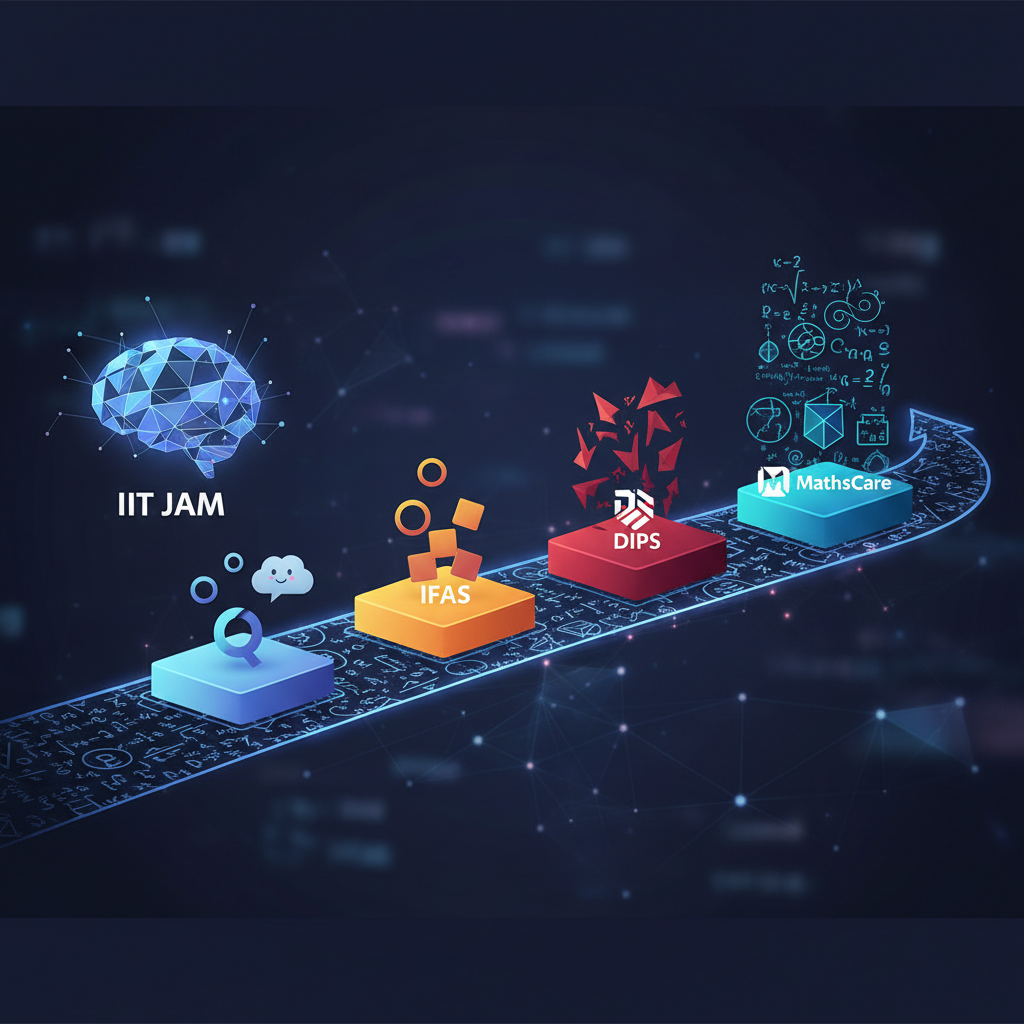
One established coaching institute's own IIT JAM Mathematics test series runs to 50 tests split across topic-wise, minor, and full mock formats, built specifically to mirror the real exam's escalating difficulty. That kind of structured ramp is rare. Most aspirants discover the gap between a "mock exam" and the actual exam only after results day, when a string of comfortable mock scores doesn't translate into a competitive rank.
Across IIT JAM Mathematics test series, none replicate real exam difficulty perfectly, but they don't fail equally. Budget-priced math test series often run easier than the actual paper by most aspirant accounts, classroom-coaching test series lean toward their own syllabus rather than JAM's exact pattern, and community-recommended picks vary too much in quality to trust without checking past papers yourself.
This comparison scores each option against four criteria that most paper-analysis roundups skip entirely: how difficulty feels to actual test-takers, how closely questions match past-year patterns, whether mock scores predict real ones, and whether difficulty climbs realistically from topic tests to full mocks.
Why Most IIT JAM Paper Analyses Skip the Difficulty Question
Most IIT JAM content online reviews one year's paper in isolation: how many questions, which topics, what the cutoff looked like. That tells you what the exam covered, not how a specific test series' difficulty compares to it. A paper analysis and a difficulty-calibration comparison are answering two different questions, and treating them as the same thing is exactly why students get blindsided.
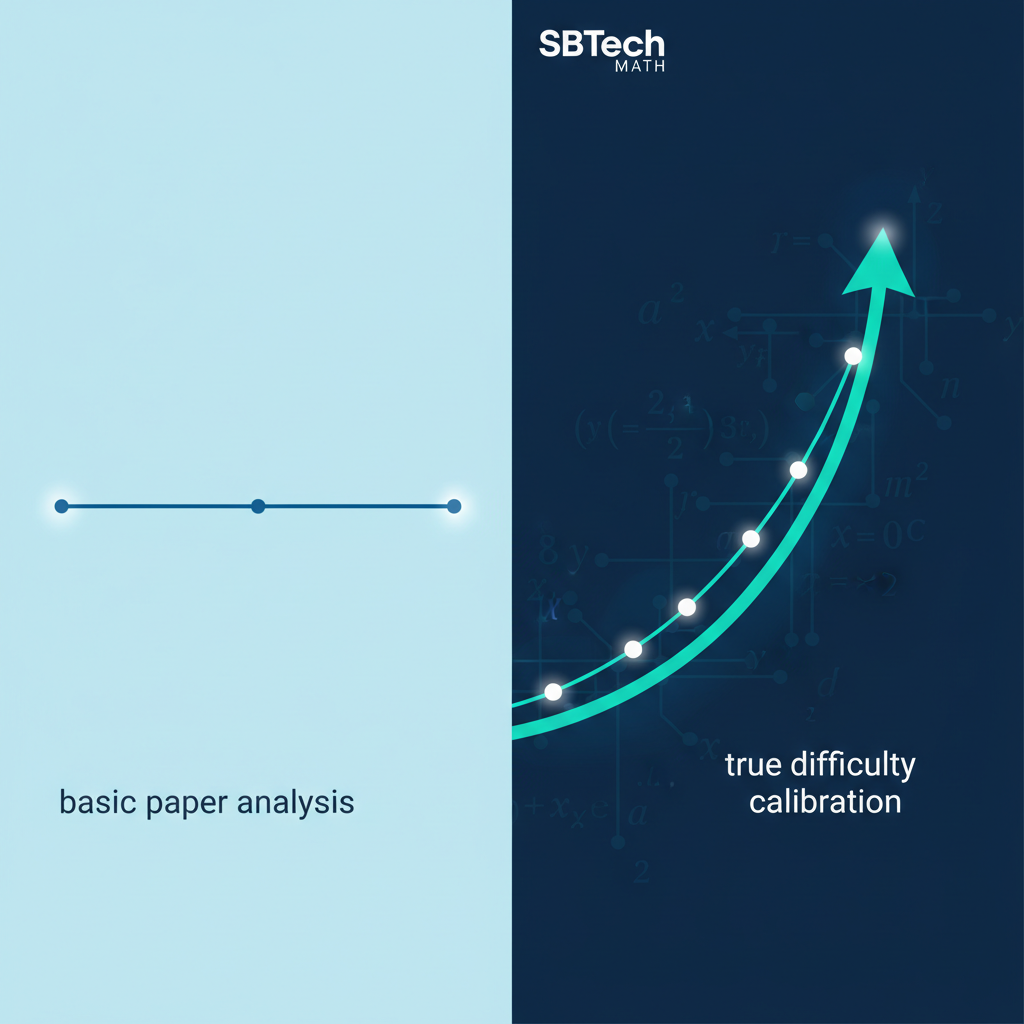
One detailed analysis of the IIT JAM 2020 Mathematics paper found the exam ran "moderate to difficult," with Section C's numerical-answer questions noticeably harder than the sections before it. That's useful context for what the real exam looks like. It says nothing about whether any given test series' mock tests reach that same Section C difficulty, or stall out well below it, which is the actual thing that determines whether your practice builds real readiness.
That's the gap this comparison closes. Instead of reviewing one exam year, it scores test series against each other on the thing that actually decides outcomes: difficulty calibration. If you're rebuilding your prep from scratch after a shaky first attempt, this distinction matters even more, because a test series that never pushes past "moderate" won't expose the gaps a harder real paper will find.
IIT JAM Test Series Difficulty Comparison
Four criteria decide whether a test series builds real readiness or false confidence: how difficulty feels against the actual exam, how closely questions match past-year types, whether mock scores predict real ones, and whether difficulty escalates properly instead of staying flat. Here's how the platforms aspirants actually ask about stack up on each one.
The picture looks different once you separate marketing language from calibration.
| Platform | User-Reported Difficulty | Past-Paper Alignment | Score Correlation | Difficulty Progression | Cost |
|---|---|---|---|---|---|
| Budget-priced math test series | Frequently described as easier than the real paper, especially in later-stage mocks | Topic-wise tests track the syllabus, but numerical-answer items rarely reach real Section C difficulty | Not independently verified; anecdotal reports of high mock scores not holding up on the actual paper | Largely flat across topic tests, with a jump only at the final mock stage | Launch pricing around ₹1,199, discounted to ₹719 with a promo code, per the official Telegram test series announcement |
| Classroom-coaching test series | Coaching-oriented question style; aspirants report it feels closer to classroom assessments than JAM's exact exam format | Strong on syllabus coverage, less consistent on matching JAM's specific question phrasing and numerical-answer emphasis | Not independently verified | Progression tied to coaching batch schedule rather than a dedicated mock-difficulty curve | Bundled into coaching program fees rather than sold standalone |
| Multi-subject coaching test series | Built around the provider's own Biotechnology and allied-subject test formats; Mathematics-specific difficulty calibration is less documented | Strong for Biotechnology and Mathematical Statistics per these providers' own result claims; Mathematics alignment is less discussed by aspirants | Not independently verified | Structured unit-test-to-mock-test progression, though built primarily for its Biotechnology audience | Program-based pricing tied to the provider's coaching batches |
| Community-recommended platforms | Wildly inconsistent; one aspirant's "too easy" is another's "too hard," with no shared benchmark | Varies by platform; several recommendations (like one such test series) note that coaching centres "tend to deviate from the general trend of the question paper" | Not tracked; recommendations are experience-based, not data-based | Depends entirely on which platform gets recommended in a given thread | Ranges from free resources to full coaching packages |
One widely shared community answer on this exact question is worth quoting directly, because it names the core problem better than most paid analyses do: coaching test series "tend to deviate from the general trend of the question paper," and the only real fix is to solve previous year questions first, then compare that experience against any mock series before trusting its scores. That's the realism check missing from most "which test series is best" roundups; they compare features and price, not whether the difficulty curve matches what you'll actually face.
Realism Index: Which Platform to Use for What
None of these platforms publish an official difficulty-calibration score. Treat this as a directional read based.
Best for realistic practice: The established provider's structure, with topic-wise, minor, and full mock tests in clearly separated tiers, is the closest publicly documented model to a genuine difficulty ramp, though it's built for its own coaching ecosystem rather than as a standalone add-on.
Best for confidence-building: Budget-priced test series' topic-wise tests work fine for reinforcing concepts early in prep, provided you don't mistake a strong mock score there for exam-readiness. Pair it with actual past-year papers before trusting the number.
Best for budget: Free previous-year paper drives and low-cost promo-priced bundles (like a promo-priced launch bundle) are reasonable for early practice, as long as you supplement with harder, exam-aligned mocks closer to test date.
The throughline across every source here, including aspirant experience threads, is that past-year papers reveal "true difficulty" in a way that no single test series does alone. That's not an argument against test series. It's an argument for cross-checking any test series against past papers before trusting its difficulty level, which is exactly the check most "which test series is best" content skips.
Why This Matters More Than Feature Lists
Most comparisons stop at test count, syllabus coverage, and price, and those things matter. But a test series with more tests and full syllabus coverage that's still calibrated too easy will produce the exact failure mode driving this search: mock scores that feel great until the real exam lands harder questions in unfamiliar phrasing, especially in numerical-answer sections that past papers consistently flag as the toughest part of the exam.

If you've relied on previous-year papers alone without a calibrated test series, that approach has its own gaps worth understanding before you pick your next mock series. And if you're deciding whether structured coaching or self-study test series make more sense for your timeline, this breakdown of what coaching actually delivers is a useful next read.
Build Difficulty-Calibrated Practice with SBTech Math
SBTech Math's approach to IIT JAM Mathematics preparation is built around closing exactly this gap: structured foundation-building paired with practice that doesn't let you coast on inflated mock scores. Explore the course store for IIT JAM-specific preparation tracks, or check membership options if you want ongoing access as you move from topic-wise practice into full-length, exam-realistic mocks. New to the platform? Start with free study content to see the teaching approach before committing.
FAQs on IIT JAM Test Series Difficulty Comparison
This usually comes down to difficulty calibration, not your preparation. If a test series' mocks run easier than the real exam, especially in numerical-answer sections that past-year analyses consistently flag as the hardest part of the paper, you'll score well on mocks and then face unfamiliar difficulty on exam day. The fix is cross-checking any test series against actual past-year papers before trusting its scores as a readiness signal.
Are Budget-Priced Test Series Too Easy for IIT JAM Preparation?
Aspirant reports suggest some budget-priced test series' mocks, particularly topic-wise tests, often run easier than the actual JAM paper, with difficulty progression staying largely flat until later mocks. It's reasonable for early concept reinforcement, but pairing it with genuine past-year papers is important before relying on its scores as a predictor of exam performance.
What's the Difference Between a Paper Analysis and a Difficulty-calibration Comparison?
A paper analysis reviews one exam year in isolation, covering topics tested, question count, and difficulty of that specific paper. A difficulty-calibration comparison instead measures how a test series' mock difficulty compares to the real exam across multiple criteria, alignment, score correlation, and progression, which is the information that actually predicts whether your practice will translate to exam-day performance.
Do Classroom-Coaching Test Series Match the Exact IIT JAM Question Style?
Not always. As one linked aspirant response notes, coaching centres "tend to deviate from the general trend of the question paper," which has both benefits (broader question exposure) and drawbacks (calibration mismatch). Solving official past-year papers alongside any coaching test series is the recommended way to spot that gap early.
How Many Mock Tests Should I Take Before the Actual IIT JAM Exam?
Structured test series that split into topic-wise, minor, and full mock tiers, totaling around 50 tests for Mathematics, are designed around gradual difficulty escalation rather than a single number. What matters more than test count is whether the difficulty curve across those tiers actually approaches real exam difficulty by the time you reach full mocks.